AI learning assistant rollout in Canvas LMS
Led the operational rollout of an AI learning assistant across nine university-partnered programmes and FourthRev's career development courses — from building the assistant for each programme and integrating it into Canvas through testing, launch, and ongoing improvement.
Project overview
LUMA is FourthRev's AI learning assistant, available in Canvas LMS through an LTI integration and a JavaScript widget. It answers questions using approved course materials and helps learners with course content, navigation, deadlines, and other common queries.
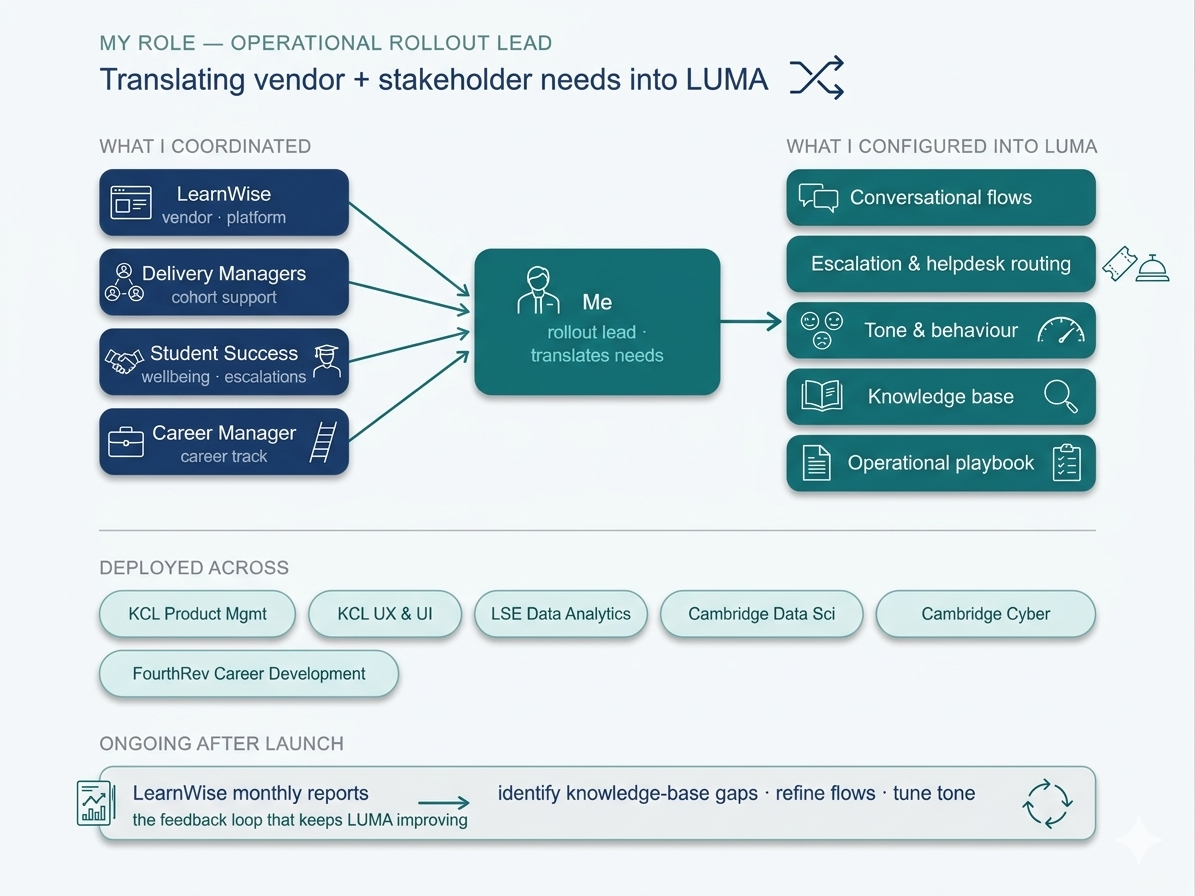
I led the operational rollout from January to April 2026, working with LearnWise's implementation specialist and colleagues across the product and delivery teams. My role combined hands-on setup in LearnWise and Canvas with coordinating the content, support arrangements, and testing needed for launch.
Key features & outcomes
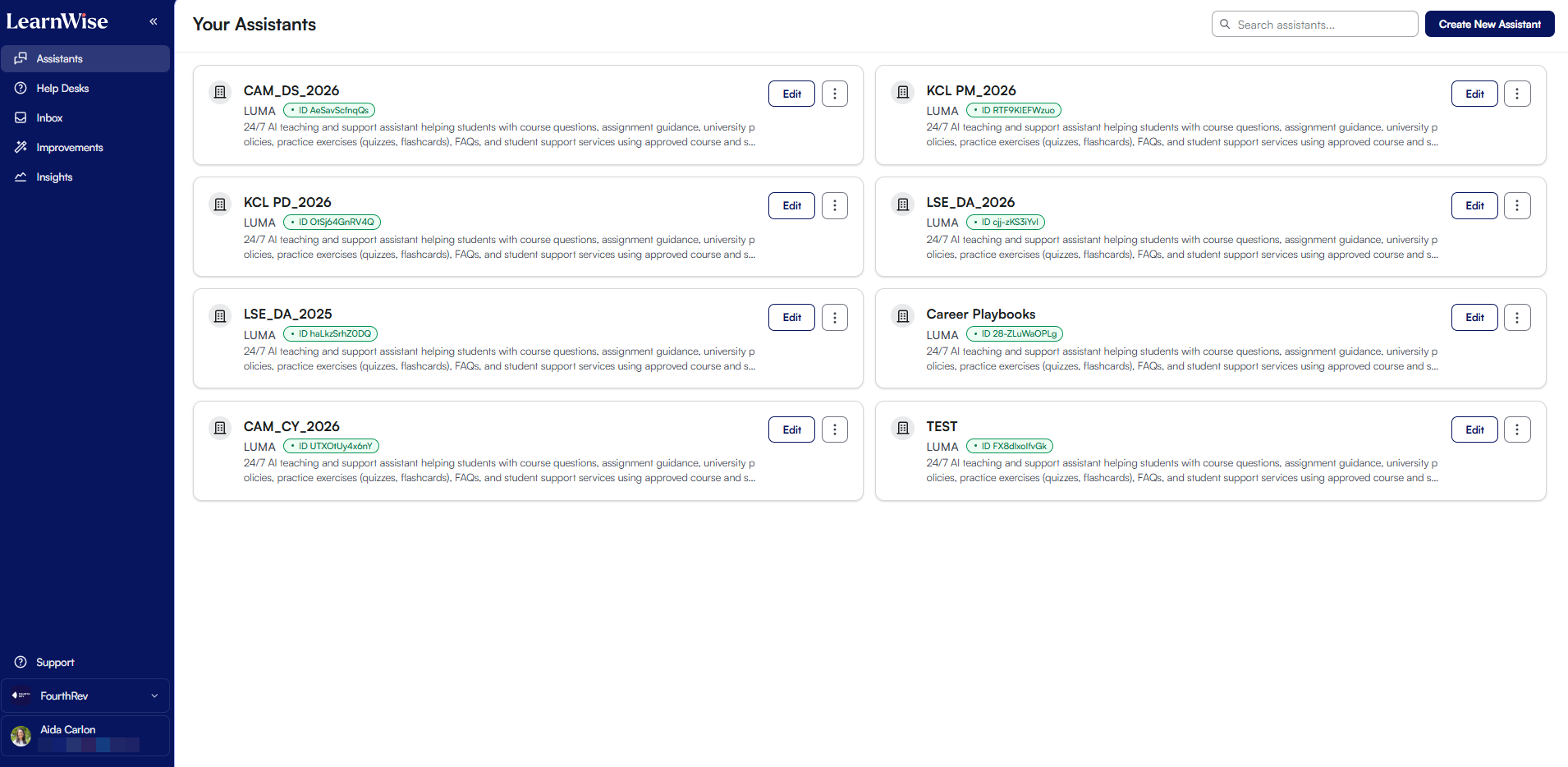
- Built and configured LUMA for each programme in LearnWise and integrated it into Canvas through LTI and JavaScript
- Coordinated the ingestion and testing of approved course materials across nine university-partnered programmes and the career development courses
- Worked with delivery managers, Student Success, Career Development, and relevant helpdesks to design FAQs, conversation flows, escalation routes, and tone of voice — allowing routine questions to be answered autonomously while directing complex or sensitive cases to human support
- Created documentation and a scalable rollout process for new cohorts, and coordinated monthly reporting to guide improvements after launch
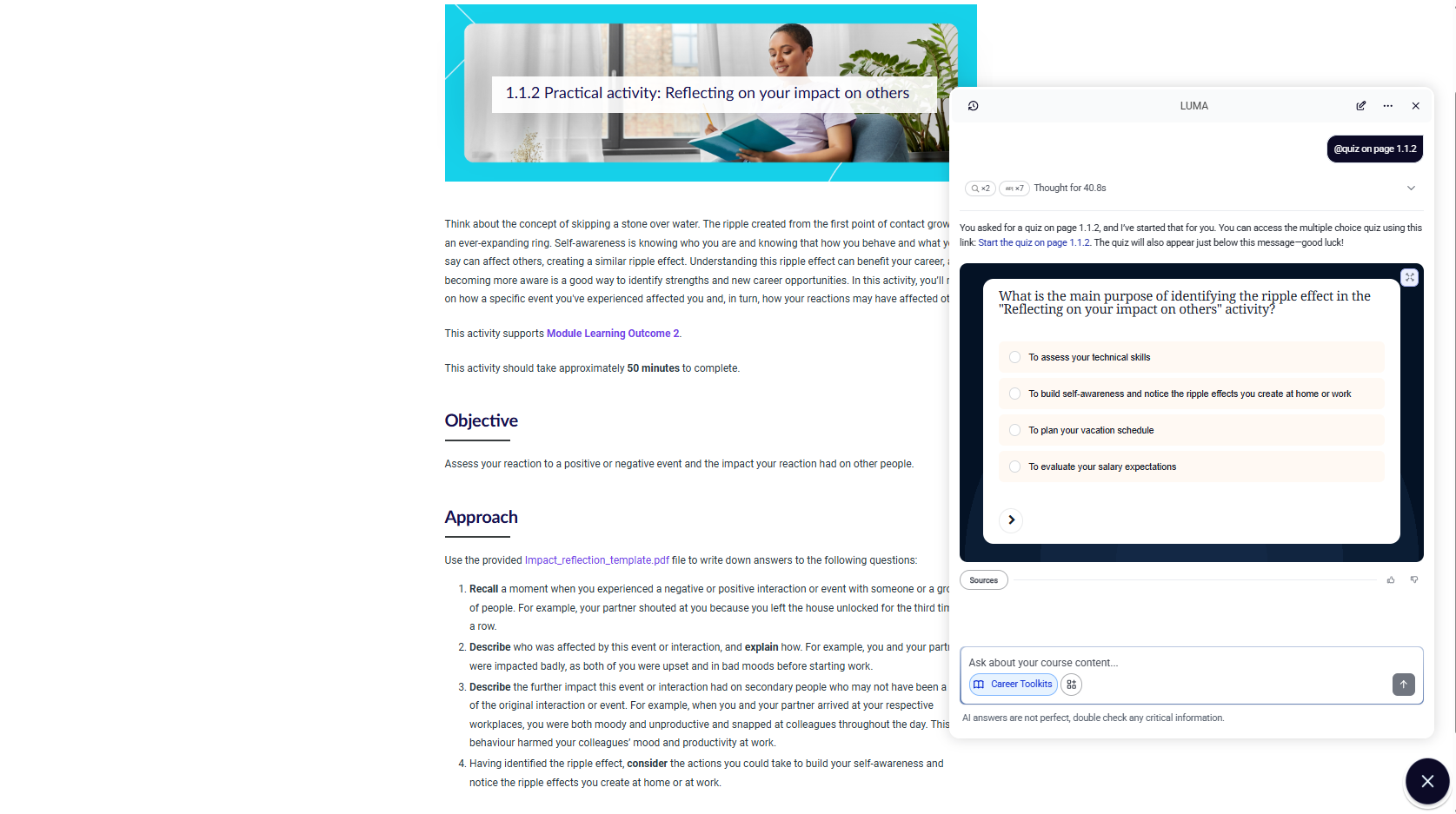
The aim was broader than reducing repetitive support questions. We wanted to improve the learner experience by giving students an on-demand learning assistant inside Canvas — one that could answer questions, explain concepts, quiz them on topics, and help them work through course activities.
Learners also needed support outside normal working hours, without requiring staff to be available around the clock or repeatedly answer the same common questions.
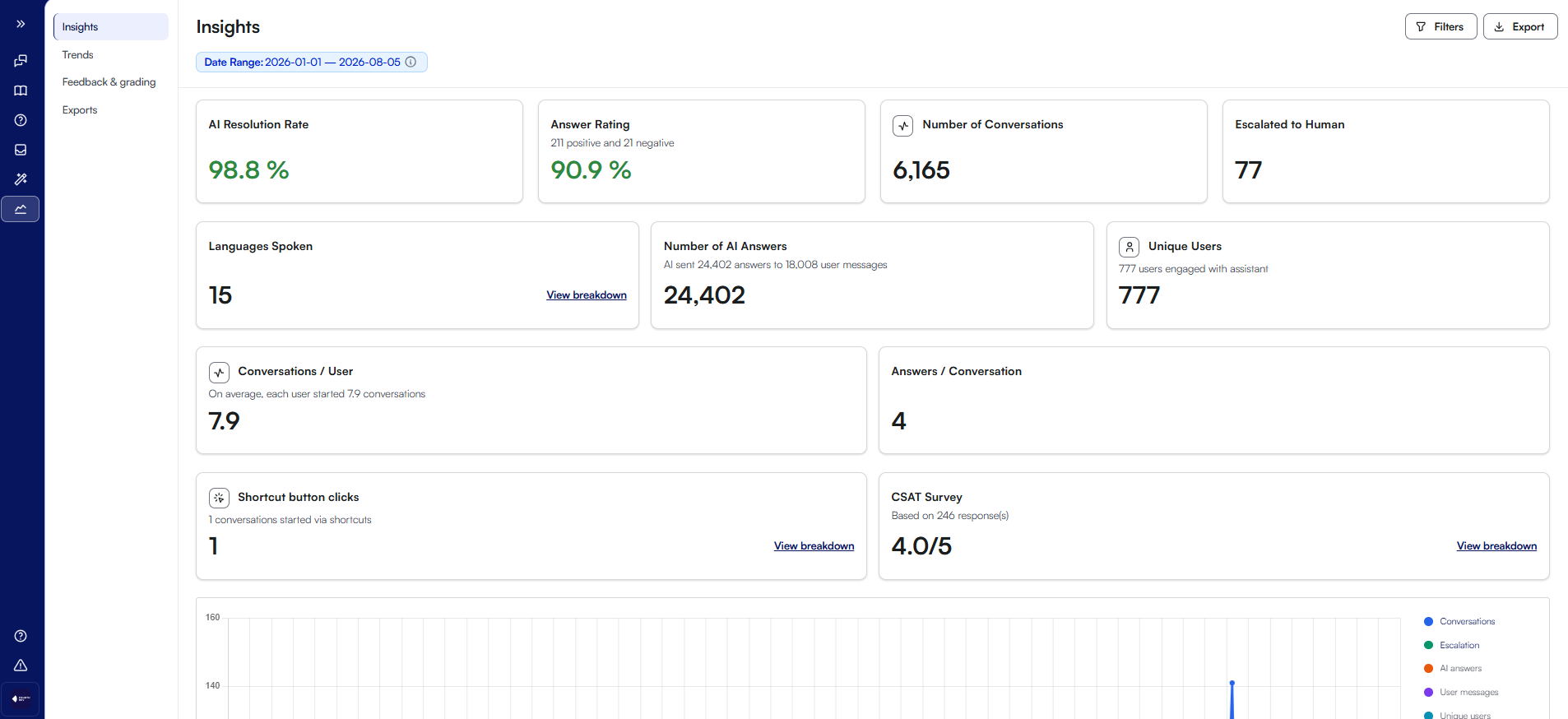
We also wanted to learn from the conversations. Beyond basic usage figures, we needed to understand what learners were asking about, where they appeared to be getting stuck, how their questions changed over time, and which parts of the course might need improvement.
As FourthRev's first live AI learning assistant, LUMA also needed to work safely across nine programmes with different content and support arrangements. Its answers had to come from approved materials, while personal, sensitive, or specialist questions still needed a clear route to human support.
Building and integrating LUMA. I built and configured the assistant for each programme in the LearnWise dashboard, then integrated it into Canvas through LTI and a JavaScript widget. I worked with LearnWise's implementation specialist to test the setup, resolve issues, and prepare each assistant for launch.
Preparing the course knowledge and support rules. I coordinated the collection and ingestion of approved course materials with colleagues across the product and delivery teams. I tested LUMA with likely learner questions and activities to check that it could explain concepts, guide learners through the content, and quiz them using the correct sources. I also worked with the delivery team to gather FAQs, agree on the tone of voice, and decide when LUMA should answer or involve a person.
Creating a repeatable rollout. I developed the testing process, deployment checklist, knowledge-base structure, and documentation needed to roll LUMA out to new cohorts more easily.
Using data to improve LUMA and the courses. I coordinated monthly reports with LearnWise and shared the findings with relevant stakeholders. The aim was to give programme teams clearer evidence for improving both LUMA and the course content.
A successful AI rollout needs more than the technology. The integration was only one part of the work. Reliable delivery also depended on approved content, careful testing, clear escalation routes, useful documentation, and clear ownership after launch.
Conversation design is learning design. Deciding how LUMA explains a concept, quizzes a learner, responds to a personal request, or hands a conversation to a person directly shapes the learner experience. It requires the same learner-centred thinking as designing course content.
Scaling requires consistency and flexibility. A shared process made each rollout faster, but every programme had different content, contacts, and support arrangements. The technical setup could be standardised; the parts affecting learner support had to be adapted.
Data is only useful when teams can act on it. Conversation reports can reveal recurring questions, content gaps, and areas where learners may be struggling. Their value comes from turning those patterns into improvements to LUMA, the course content, and learner support.