Building acarlon.me
Designed, built, and launched acarlon.me based on research and best practice, using AI tools where useful and creating a clear process for ongoing updates.
Project overview
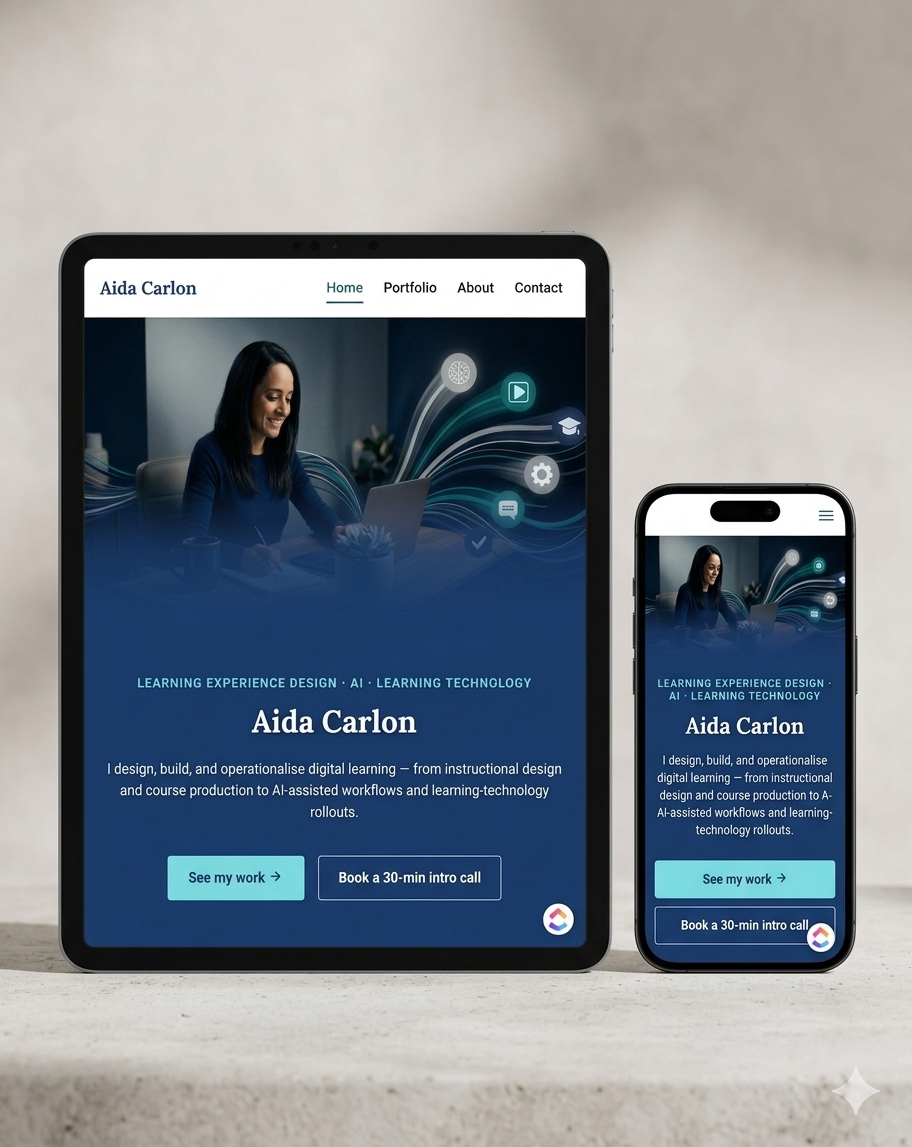
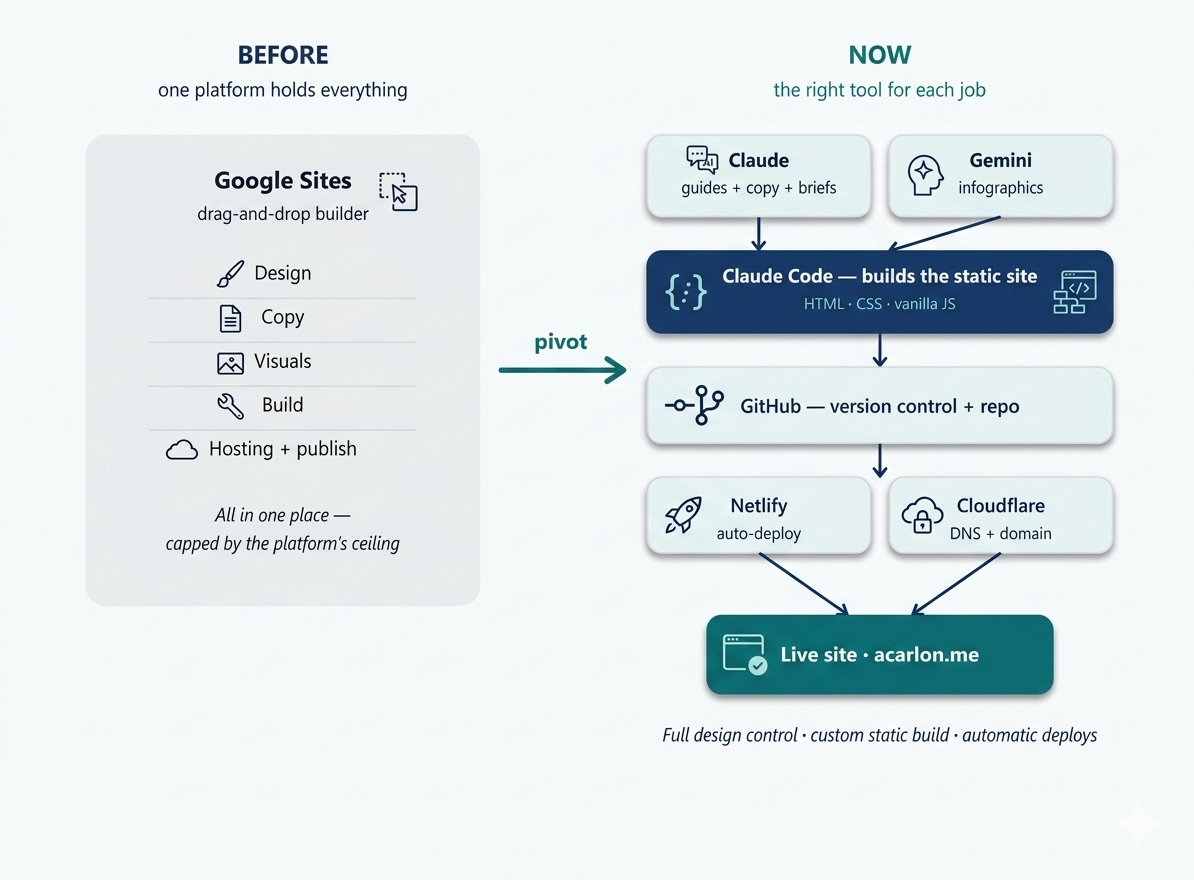
acarlon.me is my portfolio website — a standalone site stored on GitHub and automatically deployed through Netlify, with the domain managed through Cloudflare. I designed and delivered it end to end, using Claude for research, documentation, and briefs; Claude Code to build the site; Gemini for case-study infographics; and real photography for the personal identity.
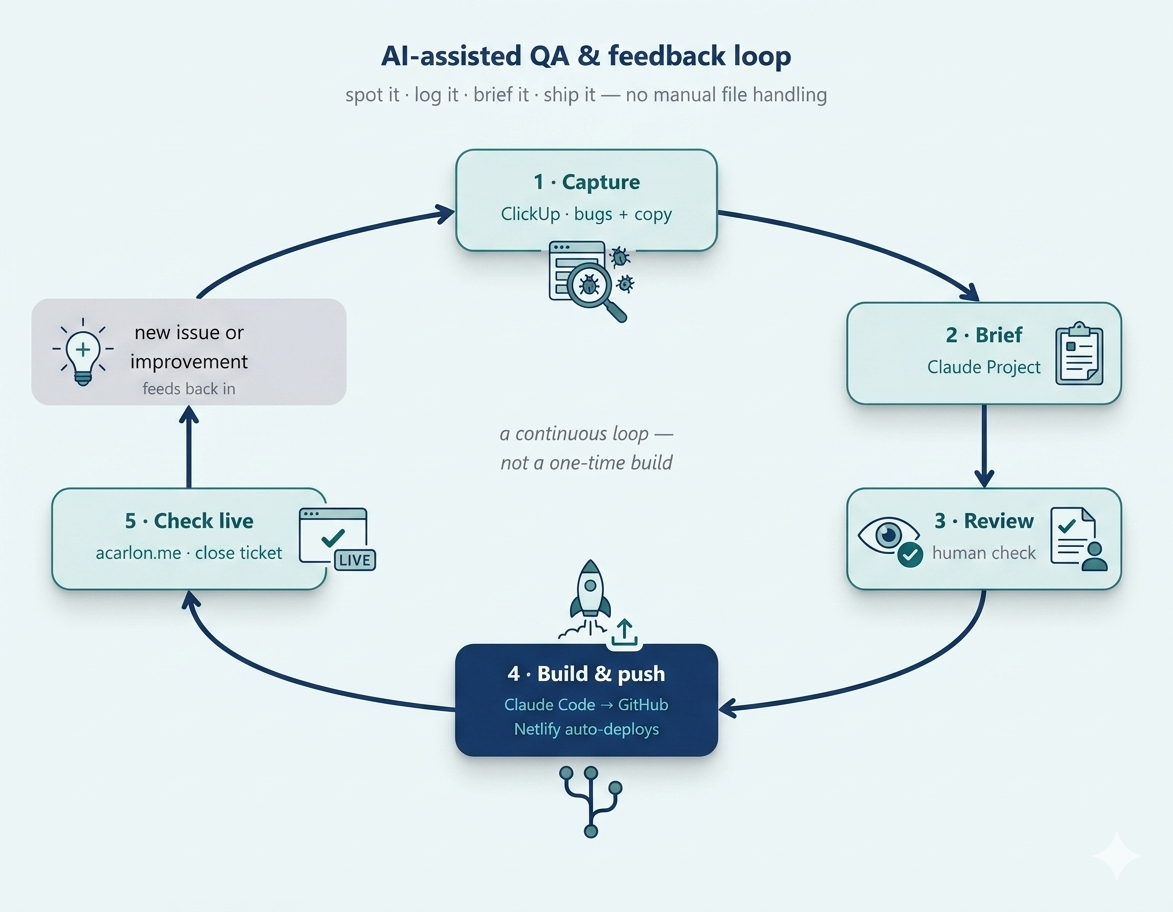
Before designing the site, I created four documents to guide the work: portfolio best-practice research, a brand style guide, a UX design and writing guide, and a sub-tag taxonomy with project mapping. I also set up a process for maintaining the site: changes are logged in ClickUp, turned into a structured build brief through a Claude Project, implemented with Claude Code, and deployed through GitHub and Netlify.
Key features & outcomes
- Shipped the portfolio end-to-end — strategy, copy, responsive design, build, and deployment
- Wrote four reference guides (style · UX & writing · information architecture · portfolio strategy) before any design work, so recurring build decisions already had a reference point
- Built a fully responsive layout across desktop, tablet, and mobile, with zoomable case-study images so visual evidence remains readable on smaller screens
- Used Claude Code with direct GitHub push as the build environment; Netlify auto-deploys on every push
- Established an AI-assisted maintenance workflow connecting ClickUp, Claude, Claude Code, GitHub, and automatic Netlify deployment
The challenge was to create a portfolio that represented my work honestly and professionally. I needed to bring together several years of projects, explain the full range of what I had done, and write copy that sounded like me.
I also wanted to use AI to make the process faster and more efficient without losing my voice or visual identity. With a limited budget, the site needed to be cost-effective to build and practical for me to maintain over time.
Researching my field. I began by researching best practice for digital-learning portfolios. This helped me decide how to present my capabilities, projects, and evidence clearly and concisely.
Developing the site's style and structure. I then created the brand style guide, UX design and writing guide, and sub-tag taxonomy with project mapping. For this work, I applied my web development training and carried out additional research into branding, UX, content design, and website structure.
Copy before design. I wrote the site copy before building the pages. This was one of the most demanding parts of the project: explaining several years of work accurately, keeping the language concise, and making sure my tone was consistent throughout.
Testing the design. I created a browser-based prototype to test the visual style and page layouts. I initially planned to build the portfolio in Google Sites, but moved to a standalone website for greater flexibility.
Using AI where it added value. I used Claude for research, documentation, and build briefs; Claude Code to build and update the site; and Gemini for information-rich case-study graphics. I used real photography for the personal identity so the site continued to feel authentic.
Making updates easier. I created a process for maintaining the site: changes are logged in ClickUp, organised into a build brief through a Claude Project, implemented with Claude Code, and deployed automatically through GitHub and Netlify.
Research made later decisions easier. Establishing the brand, writing style, site structure, and project categories before building helped me make consistent decisions throughout the site.
AI works best when each tool has a clear purpose. Using different tools for research, writing support, development, and graphics was more effective than relying on one tool for everything. It also helped protect my voice and branding.
A portfolio needs to be easy to maintain. The site will continue to change as I complete new work. Creating a simple update process was therefore just as important as launching the first version.