Circle.so learner community rollout
Supporting the cross-functional launch of a new learner community platform through technical guidance, feature testing and practical setup.
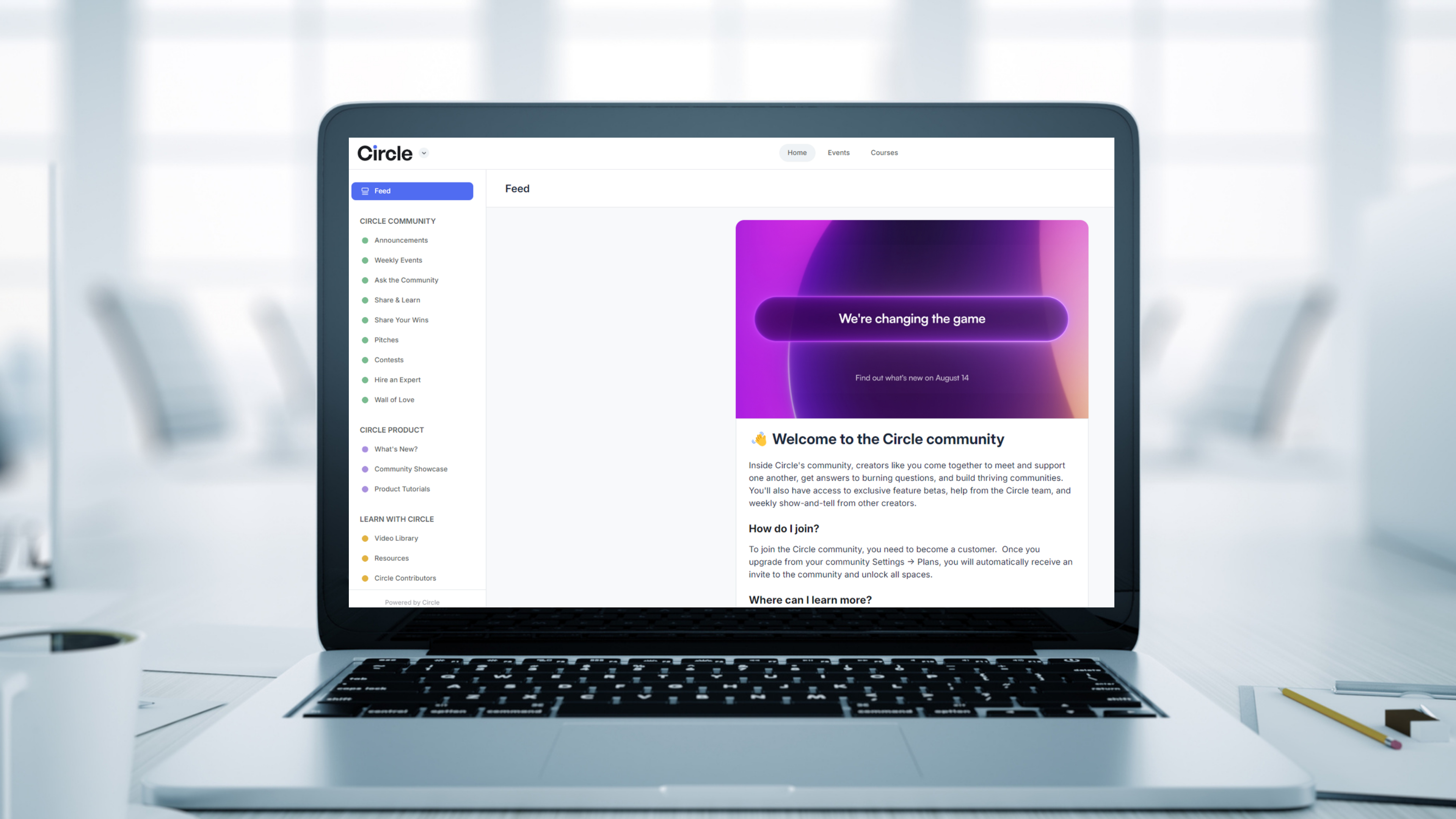
As the Learning Technologist in a cross-functional task group, I configured key areas of Circle.so, tested its live and automation features, and provided technical guidance during its launch as FourthRev's learner community platform.
Project overview
FourthRev introduced Circle as its learner community platform for future cohorts, replacing Yellowdig. Delivery, Student Success, Career Coaching, and Learning Technology worked together to shape and launch it.
My contribution covered platform configuration, feature testing, Circle-native automations, and technical problem-solving. I also worked directly with Circle's customer success team and helped scope a single sign-on requirement with a freelance developer.
The SSO work was not taken forward, so Circle and Canvas ultimately operated as separate systems.
Key features & outcomes
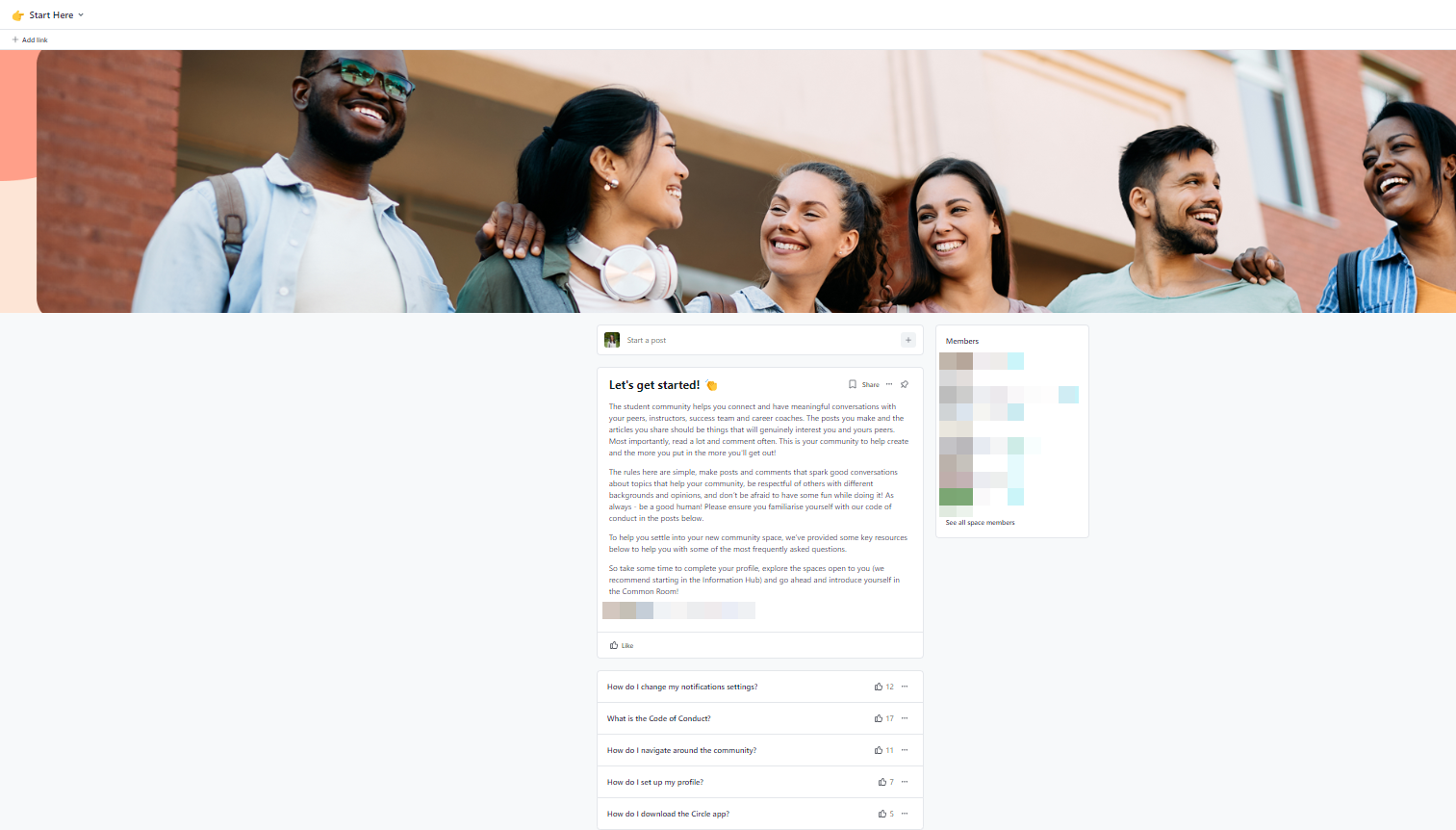
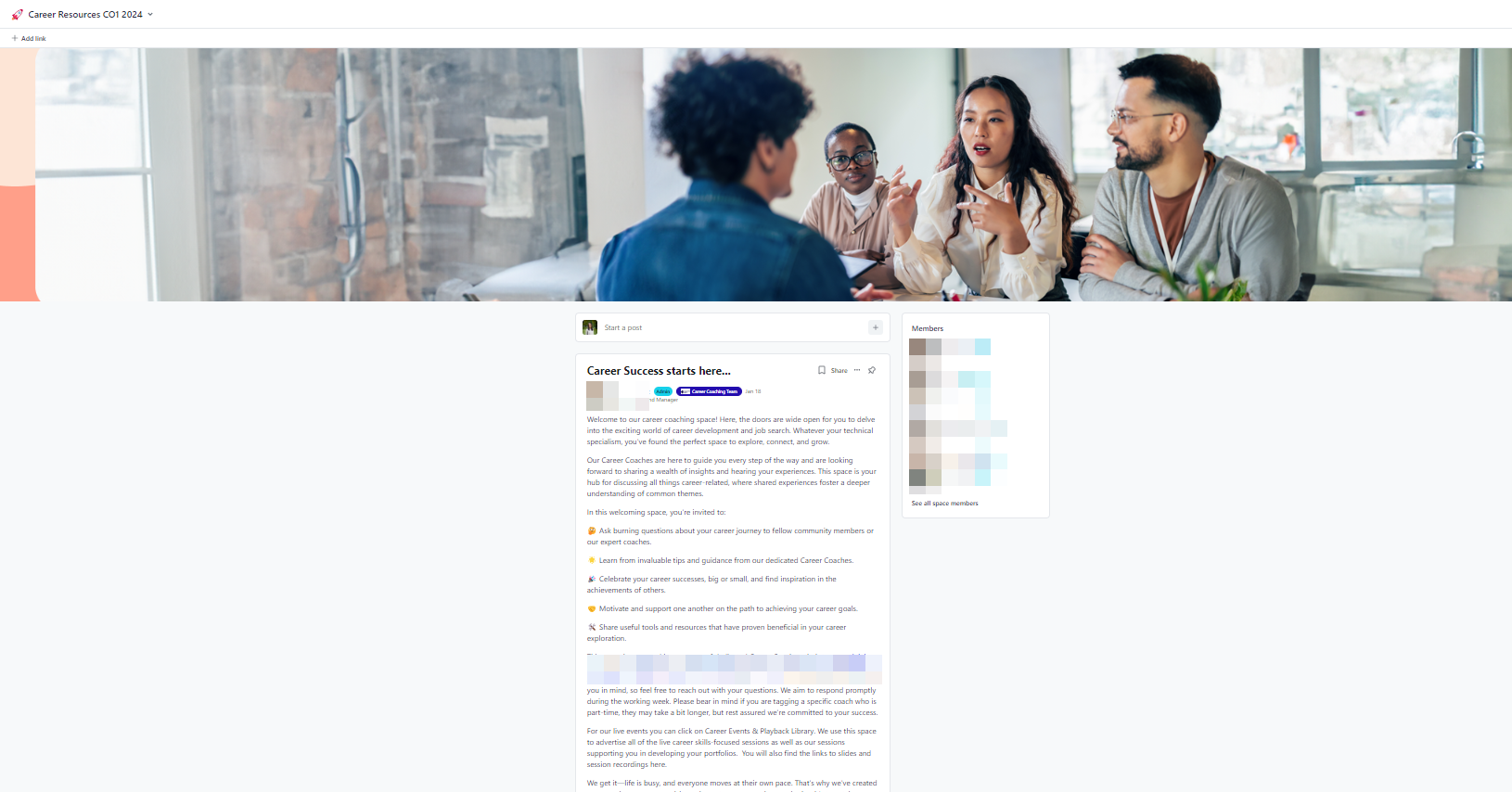
- Configured the core community spaces, including discussion areas, resource spaces, and learner-group areas for different cohorts
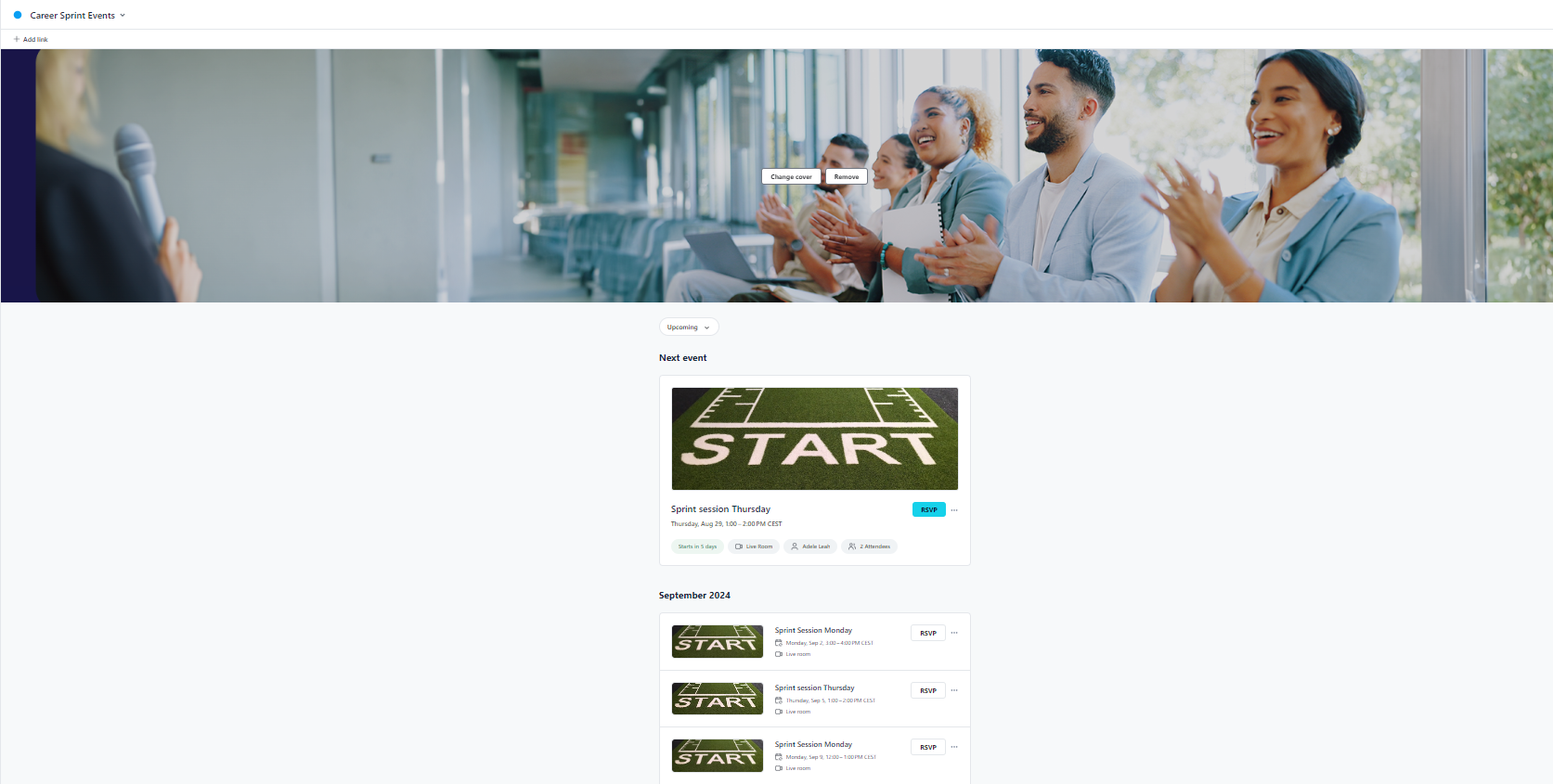
- Evaluated Circle's live-stream and room features as a potential alternative to Zoom for webinars and discussions
- Built and tested Circle-native automations for event announcements and community posts
- Worked directly with Circle's customer success team on platform practices, configuration questions, and technical limitations
- Supported colleagues with practical guidance throughout setup and launch
- Helped launch Circle as the community platform for future learner cohorts alongside Canvas
FourthRev wanted to replace Yellowdig with a more flexible community platform and reduce reliance on separate channels such as WhatsApp and Discord. The aim was to make discussions, events, resources, and learner-group activity easier to find and manage.
The task group needed to agree how the platform would support learners, how its spaces should be organised, and how different teams would operate it. We also needed to test whether Circle's live and automation features could replace parts of the existing tool stack.
A closer connection with Canvas would have required custom development. As priorities and ownership changed, the immediate focus became launching a workable community platform rather than building a connected learning ecosystem.
Design with the teams using the platform. I worked with Delivery, Student Success, and Career Coaching colleagues to translate learner and operational needs into practical decisions about spaces, resources, events, and discussions.
Configure and test the core experience. I set up key areas of the community and tested Circle's live-stream, room, and automation features against real cohort and team use cases.
Automate repetitive activity within Circle. I built and tested native automations for event announcements and community posts that would otherwise need to be created manually.
Coordinate technical questions and constraints. I worked with Circle's customer success team on platform practices and limitations. I also helped scope SSO with a freelance developer, establishing that it required custom work that was not taken forward.
Support colleagues during the rollout. I answered technical questions, helped colleagues navigate platform settings, and provided practical guidance as the community was prepared for launch.
A platform launch is a shared operational change. Technical configuration matters, but teams also need clear decisions about purpose, ownership, content, and day-to-day management.
Features need to be tested against real workflows. Exploring Circle's spaces, live features, and automations helped the group distinguish what was useful from what would require additional tools or development.
Platform consolidation is not the same as system integration. Circle provided a shared community space, but without SSO or automated data flows, it remained operationally separate from Canvas.