Storyline module for Make automation training
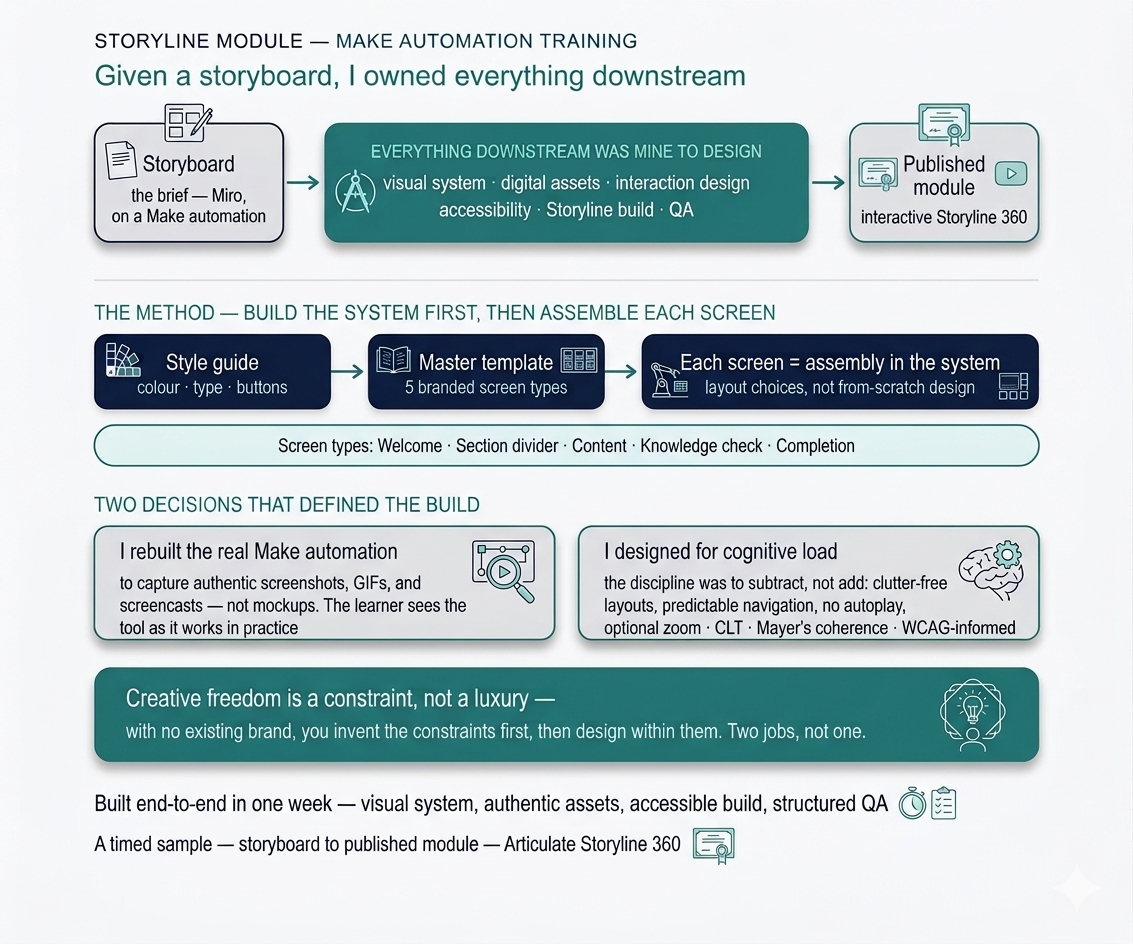
A timed development sample built from a defined brief: a Miro storyboard translated into a full interactive Storyline module — custom style guide, authentic assets recreated in Make, and an accessibility-informed build.
View the live Storyline moduleProject overview
A timed development sample produced from a defined brief: take a storyboard supplied in Miro and turn it into a complete, interactive Articulate Storyline module teaching the basics of the Make automation platform.
I built the module end to end — designing a custom style guide for it, recreating authentic Make interface assets so the screens looked real, and building with accessibility in mind throughout. The finished module is available as a live sample.
Key features & outcomes
- Translated a supplied Miro storyboard into a complete, interactive Storyline module
- Designed a custom style guide for the module — colours, type, components, interaction patterns
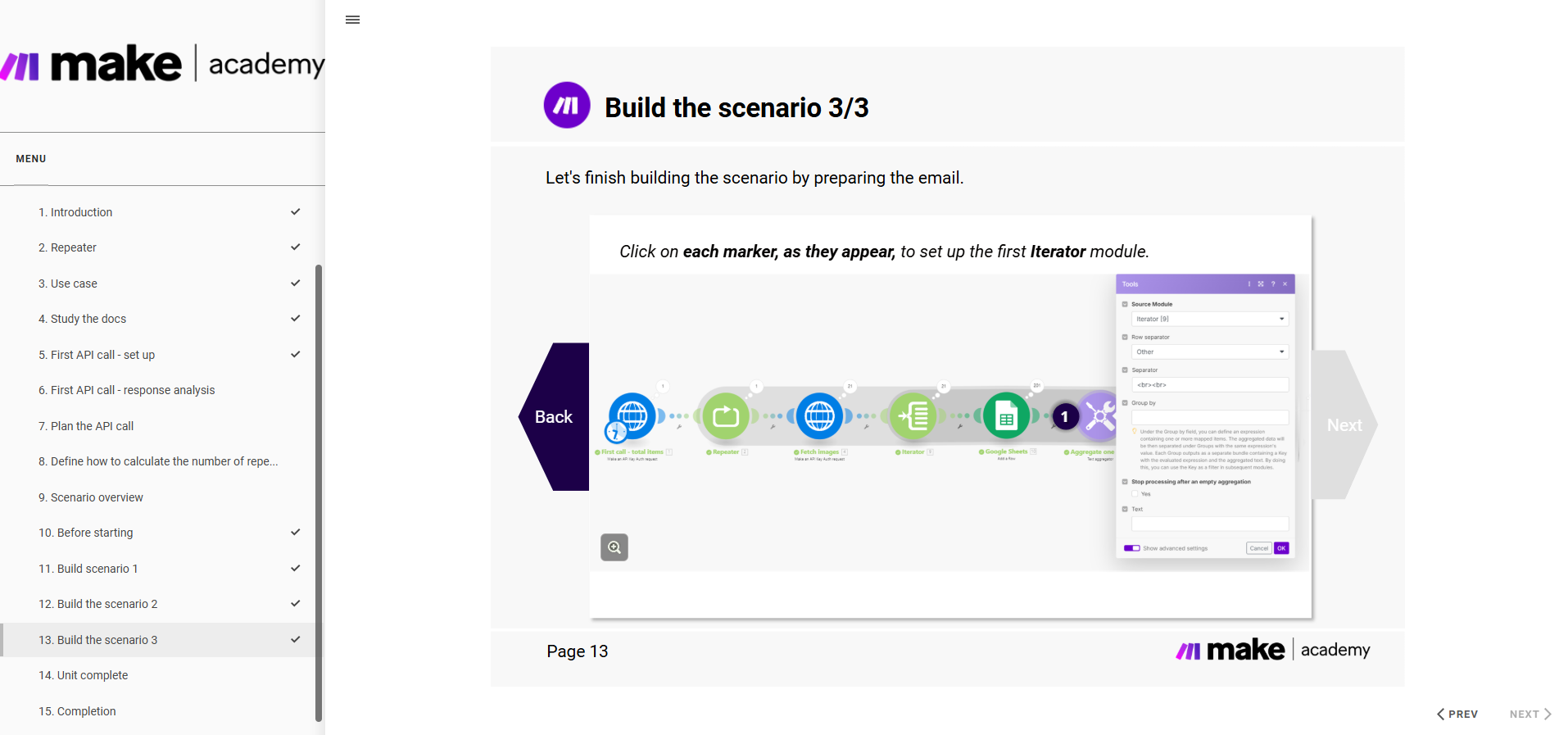
- Recreated authentic Make interface assets so the training screens matched the real product
- Built with accessibility in mind across navigation, contrast, and interaction
- Delivered within a timed window, demonstrating end-to-end build speed from brief to finished module
The brief was specific and time-boxed: turn a Miro storyboard into a fully interactive Storyline module teaching the basics of the Make automation platform — within a defined window. The storyboard set the content and flow; everything else was a build decision.
The challenge was to produce something that looked and behaved like a real, polished training module — not a rough prototype — under time pressure. That meant making fast, sound decisions about visual design, asset creation, interaction, and accessibility, without the luxury of multiple revision cycles.
Set a style guide before building. Rather than design each screen ad hoc, I defined a custom style guide up front — colour, typography, component patterns, interaction conventions. With the system decided, each screen became an assembly task rather than a from-scratch design problem. Under time pressure, that's what makes a consistent, polished result possible.
Recreated authentic Make assets. To make the training feel real, I recreated the Make interface elements the module refers to, so learners see screens that match the actual product. Authentic assets make procedural training credible.
Built accessibility in, not on. Navigation, colour contrast, and interaction were built with accessibility in mind from the start — part of the build, not a retrofit.
Worked from the storyboard, owned everything downstream. The Miro storyboard defined the content and sequence. From there I owned every downstream decision — visual design, asset creation, interaction, and the Storyline build itself.
A style guide is a speed tool. Deciding the visual system before building meant every screen after the first was assembly, not design. The upfront investment paid for itself many times over within the timed window.
Authentic assets matter for procedural training. Recreating the real Make interface made the module credible in a way generic mockups wouldn't. When you're teaching someone to use a tool, the screens should look like the tool.
Creative freedom is a constraint, not a luxury. A defined brief and a fixed deadline forced clear, fast decisions — and a sharper result than an open-ended timeline would have produced.