Digital build of two King's College London online programmes
Platform build and learning technology guidance for two sequential six-month programmes — from Canvas configuration and course production through launch, maintenance, and post-launch improvement.
Project overview
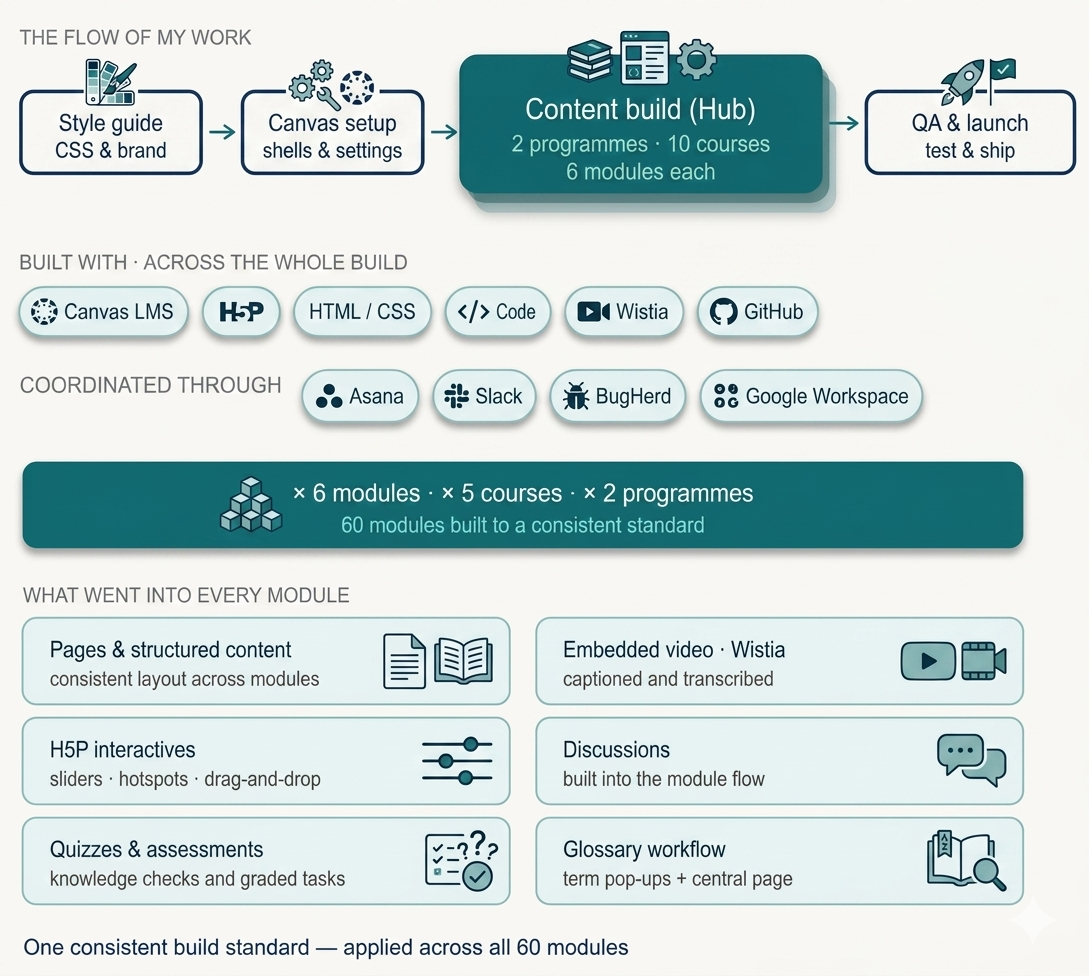
FourthRev partnered with King's College London to deliver two sequential six-month online programmes in UX & UI and Product Management. I took content and storyboards from the learning design team and turned them into fully built, tested, and launch-ready Canvas courses.
Because many colleagues were new to Canvas and FourthRev was still establishing its delivery processes, my contribution extended beyond production. I explained how the platform's features and constraints affected learning-design choices and developed practical processes for course build, technical review, maintenance, and implementing post-launch feedback.
Key features & outcomes
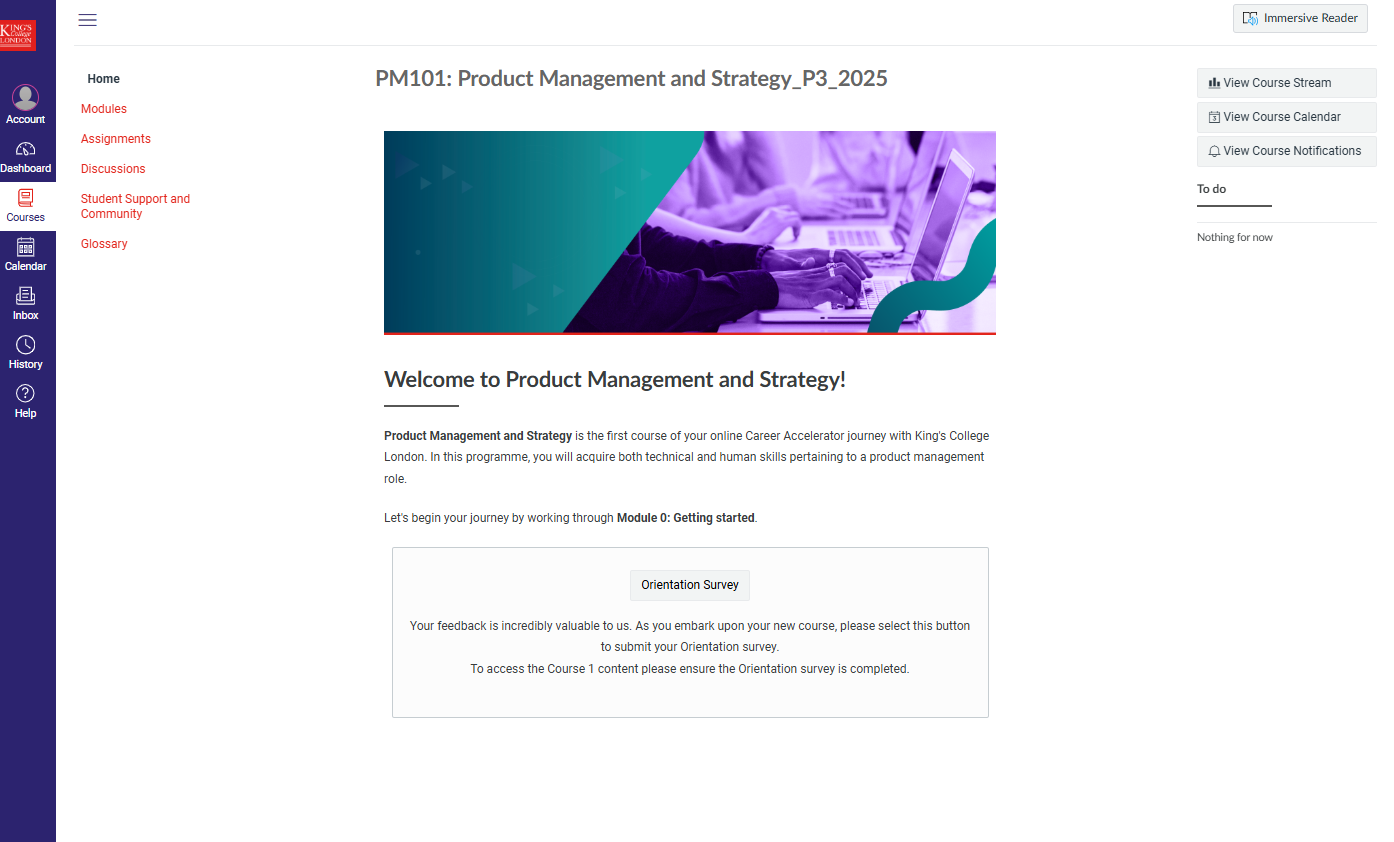
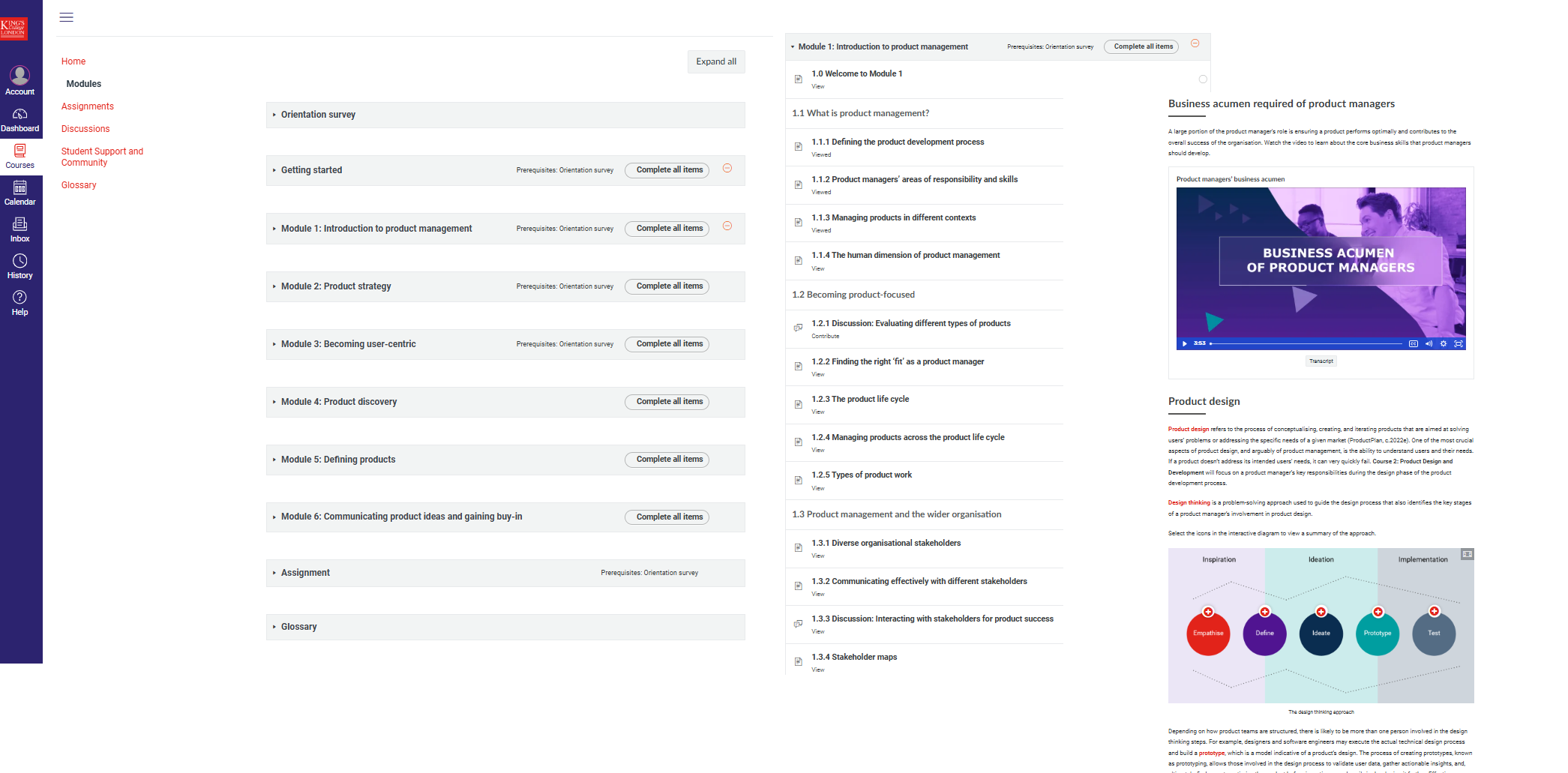
- Built and launched ten Canvas courses across two six-month programmes, maintaining consistency across structure, branding, and multimedia
- Configured Canvas sub-accounts, course shells, global settings, and brand-aligned CSS
- Advised colleagues on Canvas features and constraints so learning-design decisions were practical and maintainable
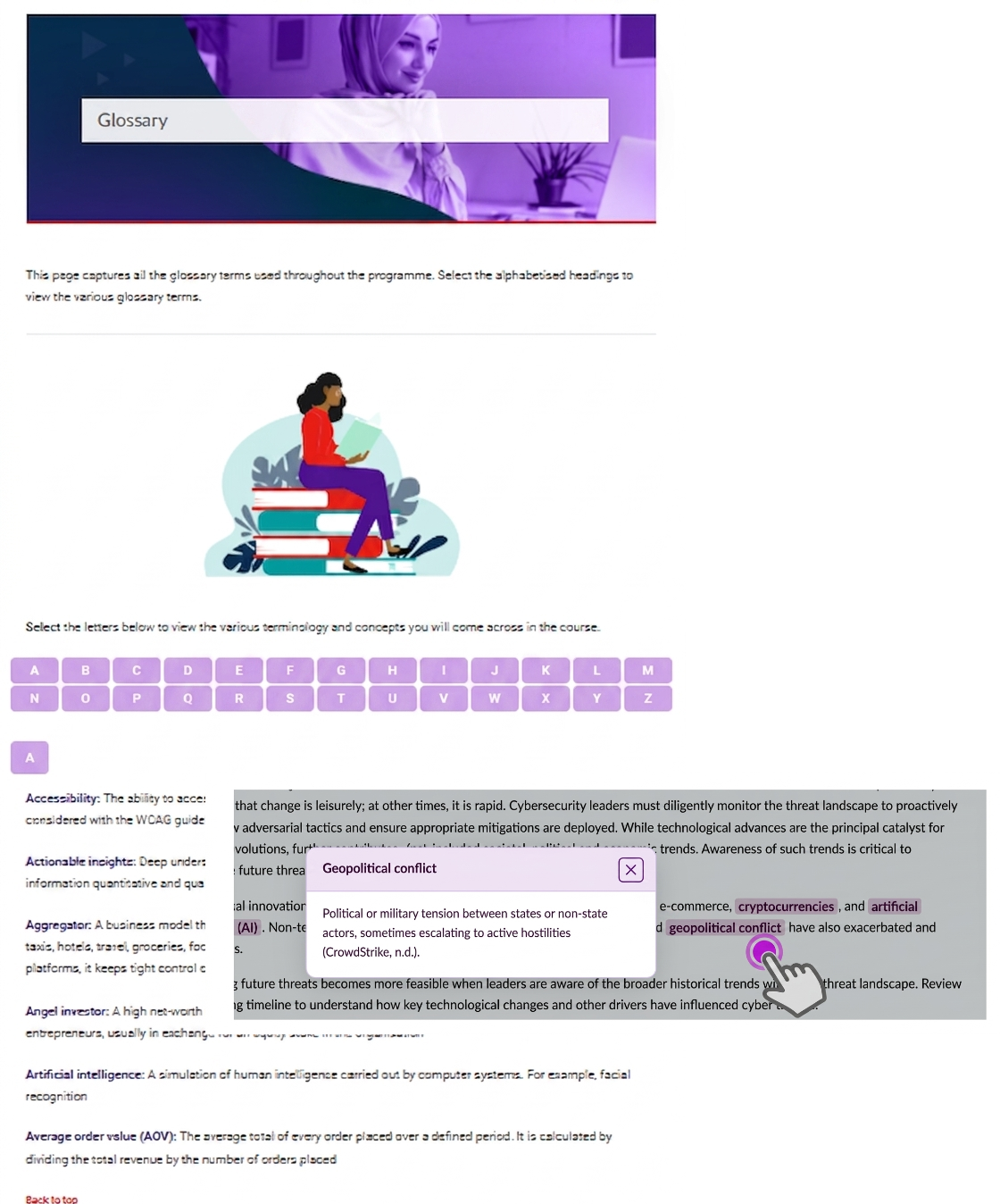
- Designed an in-course glossary system combining clickable term definitions with a central glossary page
- Rebuilt a JavaScript-dependent accordion in native HTML after a Canvas update broke the original component
- Created reusable HTML patterns in Snipit.io and introduced Text Blaze to reduce repetitive formatting and storyboard work
- Adopted Wistia's AI transcription and captioning, removing the need for a separate paid transcription workflow
- Supported live delivery through Canvas troubleshooting, learner enrolments, maintenance, and post-launch improvements
The programmes needed to meet King's College London's standards and fixed delivery timelines. At the same time, much of the wider team was new to Canvas, so learning-design decisions needed to be grounded in what the platform could support.
FourthRev also had few established processes for moving from storyboard to build, reviewing completed courses, maintaining live content, or implementing feedback consistently. By the final stages of the second programme launch, major organisational restructuring and substantial staff reductions placed further pressure on continuity and delivery.
The challenge was not only to build the courses, but also to provide the platform guidance and working processes needed to deliver and maintain them.
Guide decisions before building. I helped colleagues understand how Canvas worked in practice, including the possibilities and limitations of its core features. This allowed the learning design team to make informed decisions before content reached production.
Create a repeatable production process. I managed the route from approved content through Canvas configuration, HTML/CSS production, technical review, and launch. Lessons from the first programme informed clearer standards, reusable patterns, and a more consistent process for the second.
Build for maintenance. I designed components that would remain useful beyond the initial launch. This included a glossary system for programme terminology and native HTML accordions that were less vulnerable to Canvas updates than the previous JavaScript-dependent version.
Remove recurring workflow friction. I created a cloud library in Snipit.io for frequently used HTML patterns, including page structures, banners, and accordion blocks. I also introduced Text Blaze to reduce repetitive text entry in Google Docs storyboards.
When Wistia introduced AI transcription and captioning, I tested the feature and recommended incorporating it into the production workflow. This removed the need to send videos to a separate paid transcription provider.
Make improvement part of the lifecycle. I supported the courses after launch through troubleshooting, learner enrolments, maintenance, and feedback implementation. Clearer processes and reusable resources became especially valuable as roles and team capacity changed during the restructure.
Learning technology guidance belongs upstream. Helping the team understand Canvas before building led to more practical learning-design decisions and avoided unnecessary rework.
The process is part of the deliverable. Building the courses was only one part of the role. The processes for production, technical review, maintenance, and feedback implementation were essential to keeping the programmes workable over time.
Maintainability is a design decision. The glossary, native HTML accordions, and reusable code library were contained improvements that made the courses easier and safer to maintain.
Small workflow changes can remove substantial friction. Text Blaze, Snipit.io, and Wistia transcription addressed different points in the production process, but each reduced repetitive or unnecessary work.
Clear processes matter most during change. The restructuring showed why delivery cannot depend entirely on informal knowledge or individual team members.